Where is the stress?
 Stress, it seems to be everywhere in our daily life. Whether it's from the upcoming exam that you haven't studied, the traffic jam you sat in on your way home or on the way to an important meeting, the unjustifiable demands from your children, unfinished house chores, demanding work in your job, body pain, outstanding credit card bills, student loan, housing mortgage, toxic relationships and many others. You can name it.
How does stress affect our health?
Scientific evidence shows that long-term stress has a significant negative impact on our physical and psychological health (Levy and Bavishi, cited in Cavanaugh J. C. and Blanchard-Fields F., 2019)
Cellular level
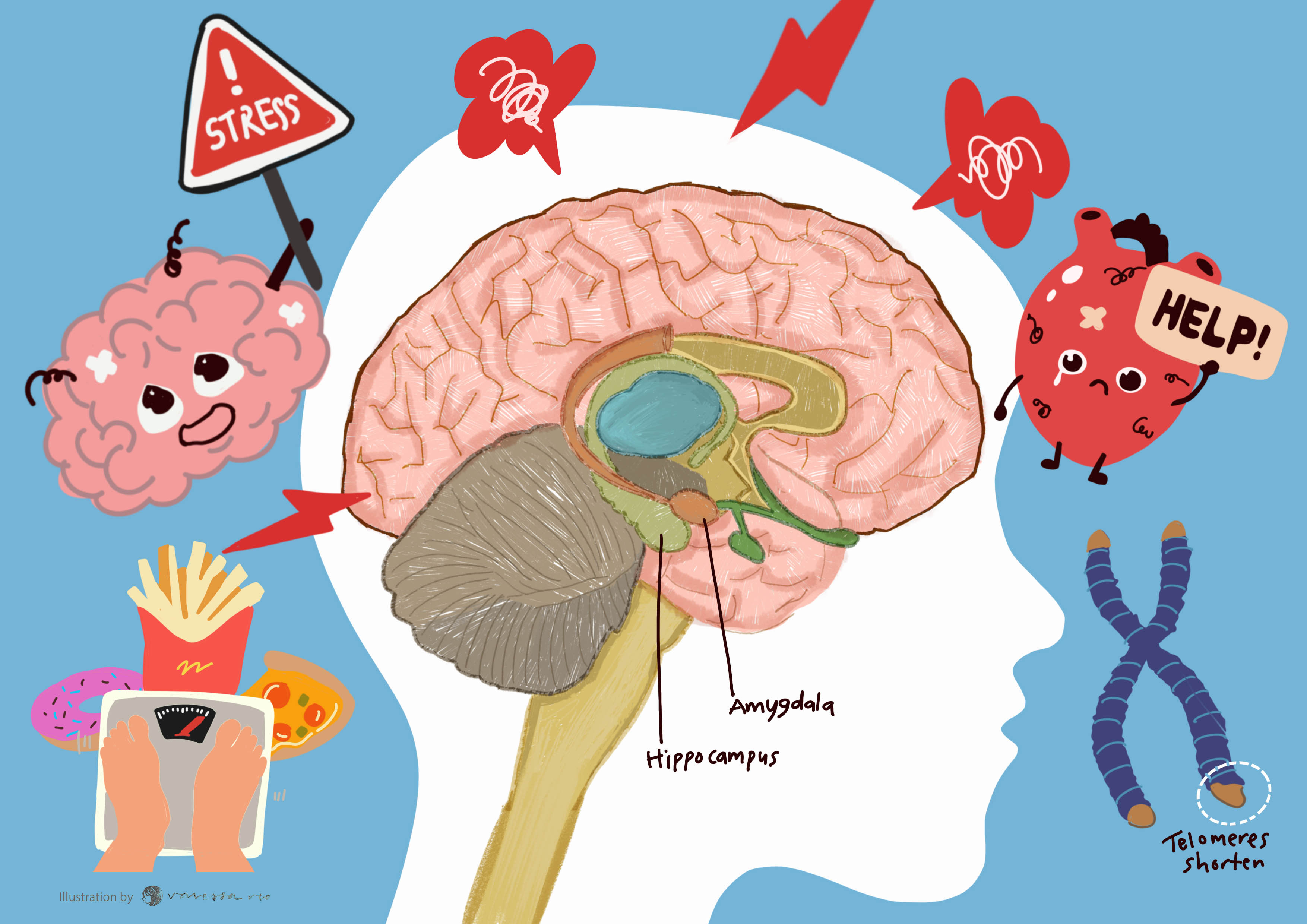
- Chronic stress may accelerate the shortening of telomeres, which are the protective caps at the ends of chromosomes.
- Telomeres play a key role in regulating cell division and reproduction, and when they become too short, chromosomes can become unstable and unable to replicate. Some researchers suggest that the rapid proliferation of cancer cells may be linked to telomeres' inability to regulate this growth.
- chronic stress can contribute to telomeres shortening, potentially leading to a shortened lifespan (Oliveira et. al., 2016; Spivak et. al., 2016 as cited in Cavanaugh J. C. and Blanchard-Fields F., 2019)
 Sympathetic Nervous System
- When we face a stressful situation, our brain's amygdala, which processes emotions, gives distress signal to the hypothalamus. Acting like a command center, the hypothalamus activates our sympathetic nervous system to adrenal glands which release epinephrine (a hormone also known as adrenaline) into bloodstream. This system, often called the "fight or flight" response. Epinephrine gives us the immediate energy to either confront the threat or escape it.
- However, if the surges of epinephrine happen too often, they can damage our blood vessels and arteries, leading to higher blood pressure and an increased risk of heart attacks or strokes.
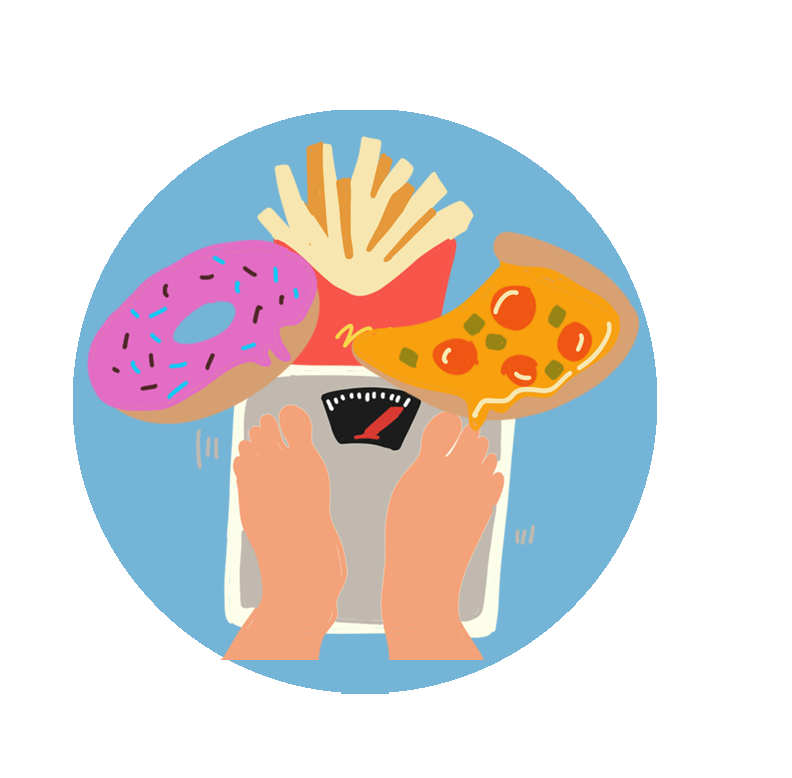
- If our brain persists something as dangerous or threatening, the hypothalamus releases a hormone that prompts the pituitary gland to release adrenocorticotropic hormone. This hormone then travels to the adrenal glands, which release cortisol. Cortisol keeps us at heightened state of alertness and readiness. Elevated cortisol helps replenish the energy we burn during the stress response. However, cortisol also leads to e buildup of fat and weight gain, such as increases our appetite to eat more food for additional energy and also increases the storage of excess fat in our body (LeWine H. E., MD, 2024)
Note :
"The autonomic nervous system consists of the sympathetic nervous system and the parasympathetic nervous system. Sympathetic nervous system triggers the fight-or-flight response, providing the body with a burst of energy so that it can respond to perceived dangers while parasympathetic nervous system promotes the "rest and digest" response that calms the body down after the danger has passed." quoted from LeWine H. E., MD (2024)
Brain Structure
- People with moderate to high level of perceived stress has been associated with decreased in size for amygdala, hippocampus and prefrontal cortex and also decreased memory and executive functioning performance in adulthood. Parents who experience perceived stress has been linked to decreased hippocampus volume in young children. (Cavanaugh J. C. and Blanchard-Fields F., 2019; Piccolo, L. R., & Noble, K. G., 2018; Hathaway, W. R., & Newton, B. W., 2023; Zhu, H. et al., 2021)
- Amygdala is a part of limbic system involved in emotional responses (example : anxiety, fear, rage)
- Hippocampus is an important brain structure associated with memory (example : consolidate of information from short-term to long-term memory, emotions, and learning)
- Prefrontal cortex is involved in higher-order executive functions (example : ability to plan and carry out plans, make choices, maintain attention and focus)
 Other
Other
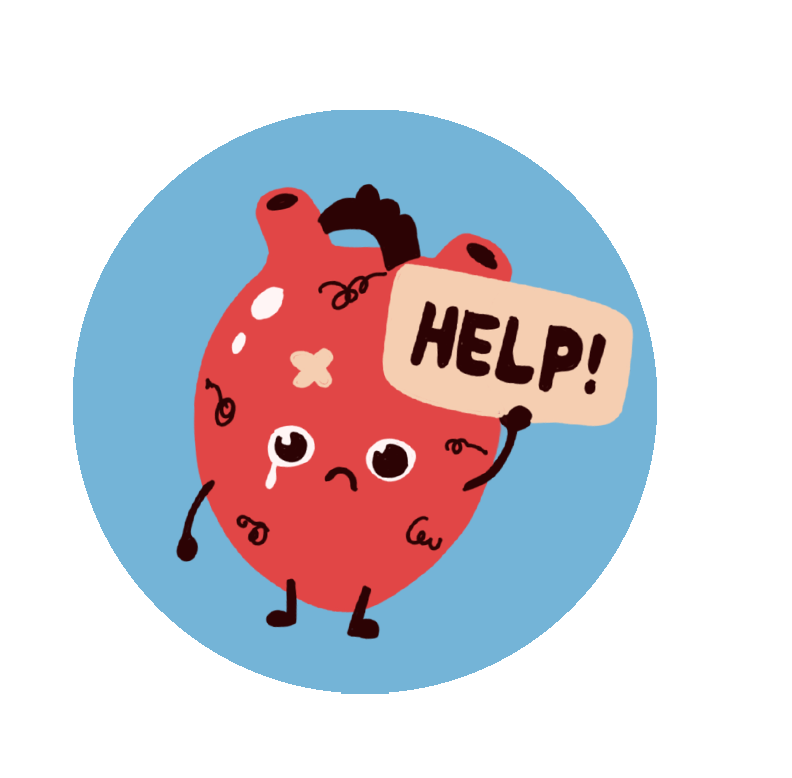
- Chronic stress increases the level of LDL cholesterol which linked to cardiovascular disease and stroke. LDL causes fatty deposits to accumulate in arteries, impeding blood flow
References:
Cavanaugh J. C. & Blanchard-Fields F. (2019). Adult Development and Aging. 8th Edition. Cengage Learning, Inc.
Hathaway, W. R., & Newton, B. W. (2023). Neuroanatomy, Prefrontal Cortex. In StatPearls [Internet]. StatPearls Publishing. Retrieved from https://www.ncbi.nlm.nih.gov/books/NBK499919/ [26 August 2025]
Johns, P. (2014). Functional neuroanatomy. In P. Johns (Ed.), Clinical neuroscience, pp. 27–47. Churchill Livingstone. https://doi.org/10.1016/B978-0-443-10321-6.00003-5
LeWine H. E., MD (2024). Understanding the stress response. Harvard Health Publishing https://www.health.harvard.edu/staying-healthy/understanding-the-stress-response [18 August 2025]
Piccolo, L. R., & Noble, K. G. (2018). Perceived stress is associated with smaller hippocampal volume in adolescence. Psychophysiology, 55(5), e13025. https://doi.org/10.1111/psyp.13025
Zhu, H., Wang, S., Qu, L., & Shen, D. (2021). Hippocampus segmentation in MR images: Multiatlas methods and deep learning methods. In Big Data in Psychiatry & Neurology (pp. 181–215). Elsevier. https://doi.org/10.1016/B978-0-12-822884-5.00019-2

Similar Post
What is healthy aging?
Sep 03, 2025
What are the changes in our skin when we age?
Aug 02, 2025