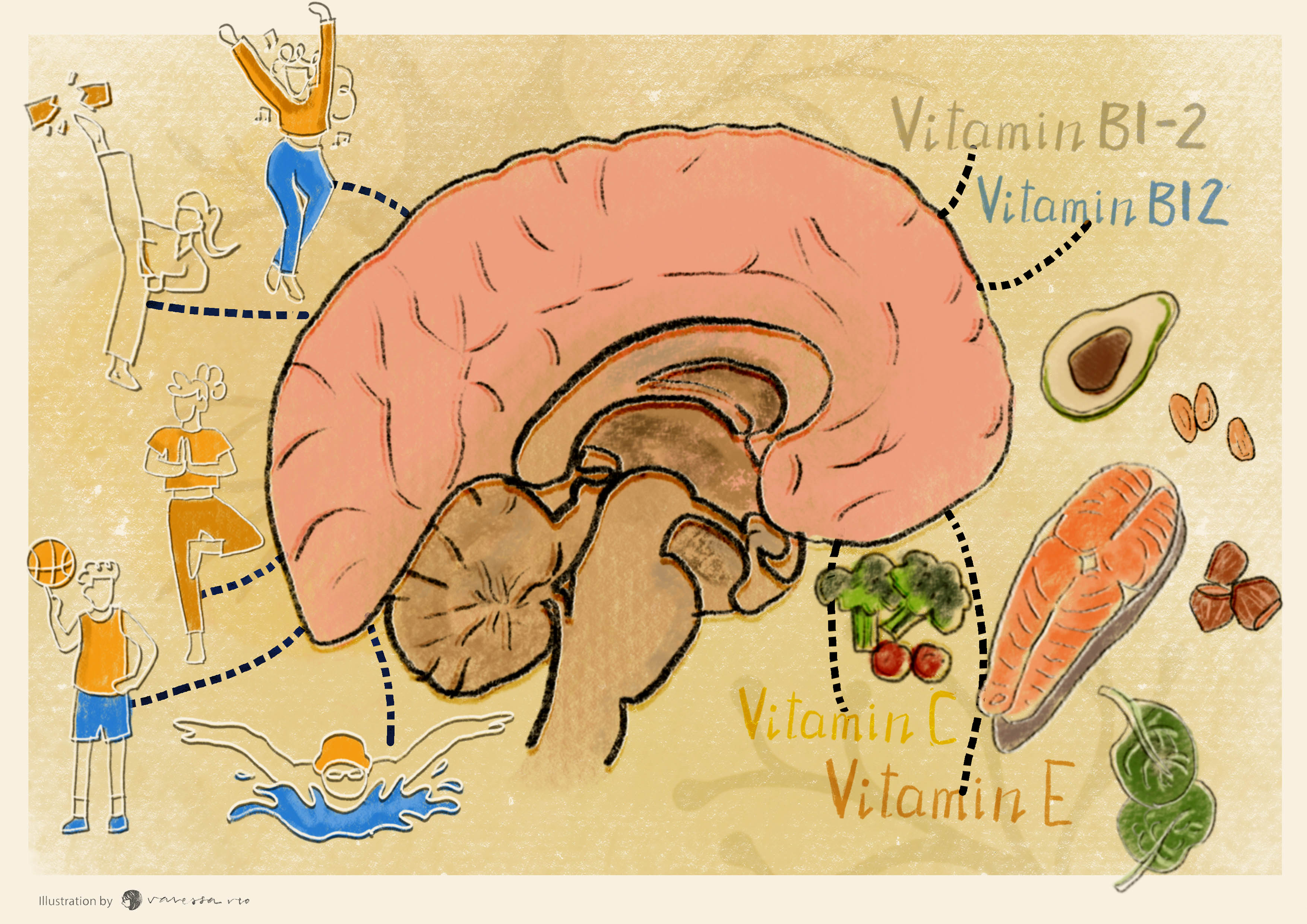
 An old saying "use-it-or-lose-it" and "you are what you eat" seems to be true on our brain.
 Aerobic Exercise (Examples : jogging, swimming, Tai Chi exercise, Zumba)
According to Nishijima, Torres-Aleman & Soya (2016) & Thomas et. al. (2012) cited in Cavanaugh J. C. & Blanchard-Fields F. (2019), the research shows that aerobic exercise can enhance our brain plasticity. Brain plasticity refers to "the changes in the structure and function of the brain as the results of interaction between brain and environment."
Aerobic exercise can help protect the hippocampus—a part of the brain essential for memory—from the deterioration linked to Alzheimer's disease. Egodawaththa, C., & Gimhani, R. (2025) stated that research shows that exercising for over 24 hours in total, spread across 8 to 12 weeks, can significantly improve brain function in individuals with mild memory problems or dementia.
-
Improved Blood Flow: Regular, long-term aerobic activity boosts blood flow to the hippocampus, the brain's memory hub, which enhances memory.
-
Vascular and Metabolic Benefits: Exercise improves the function of blood vessels and increases nitric oxide, a compound that helps blood vessels dilate. This reduces the overall risk of dementia, especially in people with conditions like type 2 diabetes.
- Cellular Protection: On a more fundamental level, aerobic exercise increases brain-derived neurotrophic factor (BDNF), a protein that promotes the growth of healthy brain cells. It also helps reduce the formation of harmful proteins, such as amyloid-beta, which are often associated with Alzheimer's disease.
However, the researchers are don't yet fully understand the exact processes that preserve these functions.
 Nutrition for Brain
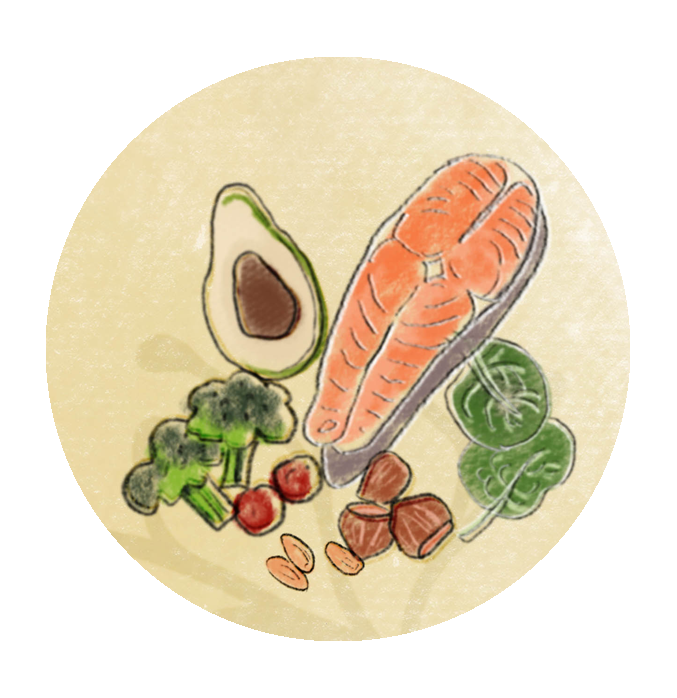
According to Bowman and colleagues (2012) and Samieri and colleagues (2012) in Cavanaugh J. C. & Blanchard-Fields F. (2019), the research found that higher level of nutrients below has associated with better cognitive functioning and brain volume. 2 types of omege-3 fatty acids : eicosapentaenoic acid (EPA), it shows the association of maintaining better neuronal structure on the right amygdala and docosahexaenoic acid (DHA) may slow down the development of Alzheimer's disease however once the disease appears, the effect of DHA diminishes.
- Vitamin B (B1, B2, B6, folate and B12)
- Vitamin C
- Vitamn D
- Vitamin E
- omega-3 fatty acids
References:
Cavanaugh J. C. & Blanchard-Fields F. (2019). Adult Development and Aging. 8th Edition. Cengage Learning, Inc.
Egodawaththa, C., & Gimhani, R. (2025). The role of aerobic exercise in the prevention of dementia. https://www.theseus.fi/handle/10024/886866
Taylor-Piliae, R. E., & Froelicher, E. S. (2004). Effectiveness of Tai Chi exercise in improving aerobic capacity: a meta-analysis. The Journal of cardiovascular nursing, 19(1), 48–57.https://doi.org/10.1097/00005082-200401000-00009
Norouzi, E., Hosseini, F., Vaezmosavi, M., Gerber, M., Pühse, U., & Brand, S. (2020). Zumba dancing and aerobic exercise can improve working memory, motor function, and depressive symptoms in female patients with Fibromyalgia. European journal of sport science, 20(7), 981–991. https://doi.org/10.1080/17461391.2019.1683610

Similar Post
What is healthy aging?
Sep 03, 2025

Is stress affected our health?
Aug 26, 2025